
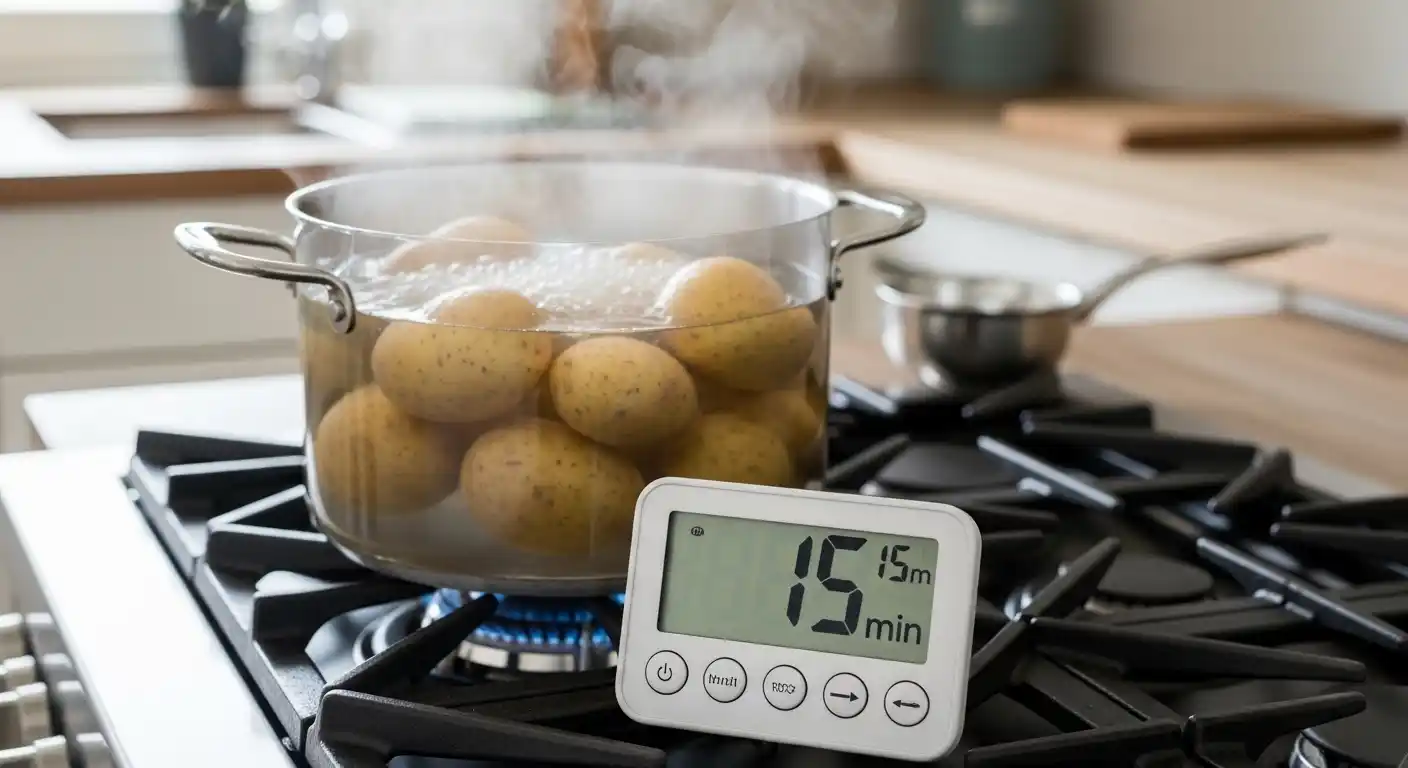

If you’ve ever stood over a pot wondering how long does potato take to boil, you’re not alone. It’s one of those kitchen questions that seems simple but actually depends on a few key factors — like size, type, and what you’re using them for. Get it right and you have fluffy, tender potatoes. Get it wrong and you’re left with something mushy or still raw in the middle.
The Basic Boiling Times You Need to Know
Here’s the honest answer: potatoes don’t all cook the same way. The boiling time changes depending on size, whether they’re whole or cut, and the variety.
Whole potatoes:
- Small (golf ball size) — 15 to 20 minutes
- Medium — 20 to 25 minutes
- Large — 25 to 35 minutes
Cut potatoes (cubed or halved):
- Small cubes (1 inch) — 10 to 15 minutes
- Medium chunks — 15 to 20 minutes
These times assume you start with cold water and bring it to a boil together with the potatoes. If you drop them into already-boiling water, shave off a couple of minutes.
How Long Does Potato Take to Boil for Different Uses
This is where most people go wrong. The “done” point actually shifts depending on what you’re making.
For Mashed Potatoes
You want them fully soft — almost falling apart. Aim for the higher end of the time range. A fork should slide in with zero resistance. For medium chunks, that’s around 18 to 20 minutes.
For Potato Salad
Here you need them tender but still holding their shape. Pull them off the heat a minute or two earlier. If they’re too soft, your salad turns into a mash. Medium cubes work best, boiled for about 12 to 14 minutes.
For Soups and Stews
These can go fully soft since they’ll continue cooking in the liquid anyway. You can even undercook them slightly before adding to your soup — they’ll finish in the broth.
For Roasting (Parboiling)
Parboiling before roasting gives you that crispy outside. You only need about 7 to 10 minutes — just enough to soften the edges without cooking them through.
Does Potato Type Affect Boiling Time?
Absolutely. Different varieties behave differently in water.
Starchy potatoes (like Russets): These absorb water quickly and get fluffy. They cook faster and fall apart easily — ideal for mashing.
Waxy potatoes (like Red or New potatoes): Denser and firmer. They hold shape better and take slightly longer — great for salads.
All-purpose potatoes (like Yukon Gold): Right in the middle. Versatile and consistent — a solid everyday choice.
Knowing your potato type helps you predict the result before you even start.
SSIS-469: What It Is and Why It Stands Out
Step-by-Step: How to Boil Potatoes Correctly
- Wash and prep — Scrub the skin clean. Peel only if needed.
- Cut for even cooking — Uniform pieces cook at the same rate.
- Start in cold water — Place potatoes in a pot, cover with cold water. This helps them cook evenly from the inside out.
- Salt the water — Add a generous pinch of salt. It seasons the potato as it cooks.
- Bring to a boil, then reduce — Once boiling, lower to a steady simmer.
- Test early — Start checking a few minutes before the expected time. Use a fork or knife to poke the center.
- Drain immediately — Don’t let them sit in hot water once done or they’ll keep cooking and go mushy.
Pros and Cons of Boiling Potatoes
Pros:
- Simple and requires minimal equipment
- Great for batch cooking and meal prep
- Preserves more nutrients compared to frying
- Versatile — works as a base for many dishes
- Easy to control texture with timing
Cons:
- Easy to overcook if you’re not watching
- Boiling leaches some water-soluble nutrients (like Vitamin C and potassium) into the water
- Can turn watery if left in the pot too long after draining
- Doesn’t add any flavor on its own — relies on seasoning
Common Mistakes People Make When Boiling Potatoes
Even experienced cooks slip up here. Here are the most common ones to avoid.
Starting with boiling water. Dropping cold potatoes into already-boiling water causes the outside to cook faster than the inside. Always start in cold water.
Cutting pieces unevenly. If one chunk is twice the size of another, they won’t finish at the same time. Take an extra minute to cut them evenly.
Not salting the water. Plain water gives you plain potatoes. Salt gets absorbed as they cook — it’s not just about seasoning at the end.
Walking away and forgetting them. Potatoes can go from perfectly cooked to mushy in just a couple of minutes. Stay close and test regularly.
Leaving them in the pot after draining. The residual steam and heat keep cooking them. Drain and let them air out briefly.
Not testing before the time is up. Recipes give general times, but your stove, pot size, and altitude all affect results. Always do the fork test.
Best Practices for Perfectly Boiled Potatoes
- Use a pot with a lid to bring water to boil faster, then remove the lid once simmering.
- Don’t overcrowd the pot — potatoes need space for even cooking.
- Keep the skin on when possible — it helps retain nutrients and prevents waterlogging.
- After draining, shake them gently in the pot over low heat for 30 seconds — this dries them out and improves texture, especially for mashing.
- Use the potato water — it’s starchy and full of flavor. Save it for soups, bread dough, or gravy.
Conclusion
Boiling potatoes isn’t complicated, but it does reward a little attention. The key things to remember: start in cold water, cut evenly, salt generously, and test with a fork before pulling them off the heat. The exact time will always vary based on size and variety, but once you understand the logic behind it, you’ll nail it every single time. Whether you’re making mash, salad, or just a simple side dish — perfectly boiled potatoes are absolutely within reach.
Frequently Asked Questions
1. How long does potato take to boil if I leave the skin on?
Roughly the same time — skin-on potatoes may take 1 to 2 minutes longer, but it’s not a significant difference. The skin actually helps protect the texture.
2. Can I boil potatoes ahead of time?
Yes. Boil them, drain, and let them cool completely. Store in an airtight container in the fridge for up to 3 days. Reheat gently or use cold in salads.
3. Why are my boiled potatoes still hard in the middle?
They likely needed more time, or the pieces were too large. Also, starting in already-boiling water causes uneven cooking. Use the cold water method and give them a few more minutes.
4. Should I add anything besides salt to the boiling water?
Salt is the most important addition. Some cooks add a bay leaf or garlic clove for subtle flavor, but it’s optional. Avoid adding oil — it doesn’t help with potatoes.
5. How do I know when boiled potatoes are done without a timer?
Use the fork test. Poke the thickest part of the potato with a fork or thin knife. If it slides in easily with no resistance, they’re done. If there’s any pushback, give them another 2 to 3 minutes.