
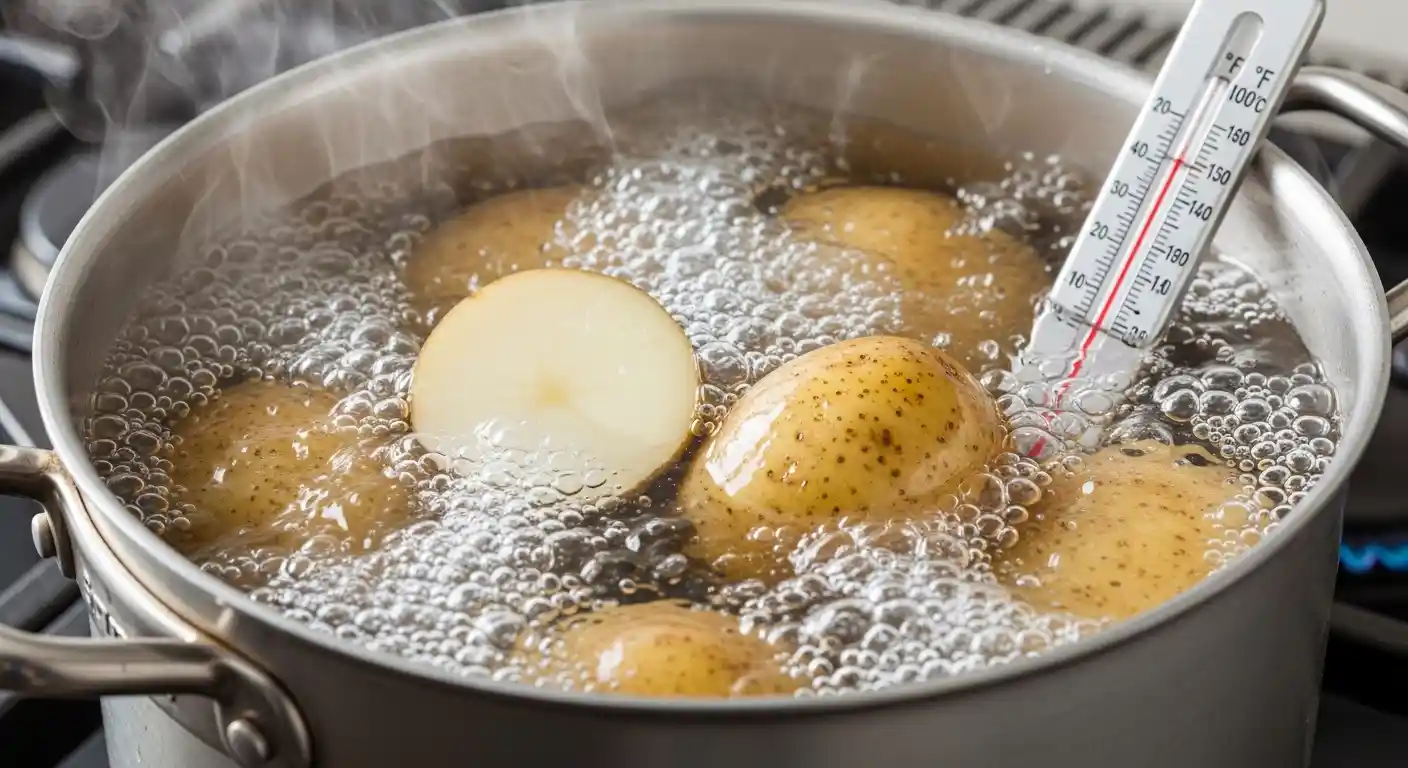

There’s a moment every cook knows — you poke a fork into a potato and it’s still rock hard, or it falls apart into mush. Getting it right comes down to one thing most people overlook: knowing what temperature to boil potatoes and how to control it throughout the process. It’s simpler than you think, but the details matter a lot.
The Right Temperature to Boil Potatoes
Water boils at 212°F (100°C) at sea level. That’s your target. But here’s the part most recipes skip — you don’t want a violent, rolling boil the entire time. That’s how you end up with potatoes that are falling apart on the outside while still raw in the center.
The ideal approach is to bring the water to a full boil first, then reduce the heat to a steady, gentle simmer around 185–200°F (85–93°C). This lets the heat penetrate evenly from the outside in, cooking the potato all the way through without destroying the texture.
If you’re at high altitude, water boils at a lower temperature — around 202°F (94°C) at 5,000 feet. So you may need to add a few extra minutes to your cook time.
Does It Matter If You Start with Cold or Hot Water?
Yes, it absolutely matters.
Always start potatoes in cold water, then bring them up to a boil together. This is one of those small habits that makes a big difference. When you drop raw potatoes into already-boiling water, the outside cooks too fast and starts to break down before the inside is done.
Starting cold allows the potato to heat gradually and evenly. By the time the water reaches boiling point, the interior has already begun cooking — giving you that uniform, tender texture all the way through.
How Long Should You Boil Potatoes?
Cook time depends on the size and type of potato, not just the temperature.
Whole potatoes:
- Small (golf ball size) — 15 to 20 minutes
- Medium — 20 to 25 minutes
- Large — 25 to 35 minutes
Cubed potatoes (1-inch pieces):
- 10 to 15 minutes is usually enough
New potatoes or baby potatoes:
- 12 to 18 minutes depending on size
The best test is still the fork test. Slide a fork or thin knife into the thickest part — if it goes in without resistance and comes out clean, they’re done.
What Is a Hitar? Uses, Benefits & Buying Guide
Boiling for Mashed vs. Salad vs. Roasted Potatoes
The end use changes how you should approach boiling.
For mashed potatoes: Cook until very tender, almost falling apart. You want them soft enough to mash smoothly without lumps.
For potato salad: Pull them off just before they’re fully soft. They’ll firm up slightly as they cool, and you want them to hold their shape when you toss them with dressing.
For roasting after boiling (parboiling): Only cook them 8 to 10 minutes. You’re just softening the outside so it crisps up beautifully in the oven — not cooking them through.
Pros and Cons of Boiling Potatoes
Pros:
- Simple and requires no special equipment
- Even cooking when done at the right temperature
- Works for nearly every potato variety
- Easy to control doneness with the fork test
- Great base method before mashing, frying, or roasting
Cons:
- Easy to overcook if you walk away
- Boiling can leach out water-soluble vitamins like vitamin C and B6
- Waterlogged potatoes happen fast if left in the pot too long after draining
- Altitude affects boiling point and adds guesswork
Common Mistakes People Make
1. Boiling at too high a heat the whole time A furious boil beats up the potato exterior. The skin breaks, the edges turn mushy, and the inside stays underdone. Bring it to a boil, then back off.
2. Skipping the salt Salt your water generously — it should taste like the sea. This seasons the potato from the inside out as it cooks. Adding salt after is never the same.
3. Cutting pieces unevenly If half your cubes are small and half are large, you’ll have some overcooked and some still hard at the same time. Keep your cuts uniform.
4. Not draining immediately Leaving cooked potatoes sitting in hot water is a fast track to mush. Drain them the moment they’re done.
5. Skipping the cold water start As mentioned above — always start in cold water. It’s the single biggest difference between amateur and reliable results.
Best Practices for Boiling Potatoes
- Use a lid while bringing the water to a boil — it speeds things up and saves energy. Remove it or tilt it slightly once you reduce to a simmer.
- Don’t crowd the pot. Give potatoes enough room so the water can circulate around them.
- Check early. Start testing with a fork 2 to 3 minutes before the minimum time suggested. Potatoes can go from perfect to overdone quickly.
- Dry them after draining. For mashing or roasting, shake the pot over low heat for 30 seconds after draining. The steam escapes and you get fluffier mash or crispier roasted potatoes.
- Match your potato to the dish. Waxy potatoes like Yukon Gold hold their shape well for salads. Starchy ones like Russets break down more, making them ideal for mashing.
Conclusion
Boiling potatoes doesn’t have to be a guessing game. Start them in cold, well-salted water, bring them up to a full boil at 212°F (100°C), then dial back to a gentle simmer and let the heat do the work evenly. Match your cook time to the size and variety, check early with a fork, and drain them the moment they’re ready.
It’s a small set of habits, but they’re the difference between potatoes that are perfectly tender and ones that let you down every time. Get these basics right and you’ve got a foundation for dozens of dishes done well.
FAQs
Q1: What is the ideal boiling temperature for potatoes?
Bring water to a full boil at 212°F (100°C), then reduce to a simmer at around 185–200°F for even, consistent cooking.
Q2: Should I boil potatoes covered or uncovered?
Cover the pot while bringing water to a boil. Once it reaches a boil and you lower the heat, you can leave the lid slightly tilted or remove it entirely.
Q3: How do I know when boiled potatoes are done?
Use the fork test. Insert a fork into the thickest part — if it slides in easily with no resistance, the potatoes are cooked through.
Q4: Why do my boiled potatoes fall apart?
Usually because the heat is too high for too long, the pieces are uneven, or they were left in the hot water after cooking. Drain immediately and use a gentle simmer.
Q5: Can I boil potatoes ahead of time?
Yes. Cook, drain, and let them cool completely before refrigerating. They keep well for up to 3 days and reheat easily in the microwave or a pan with a little butter.