
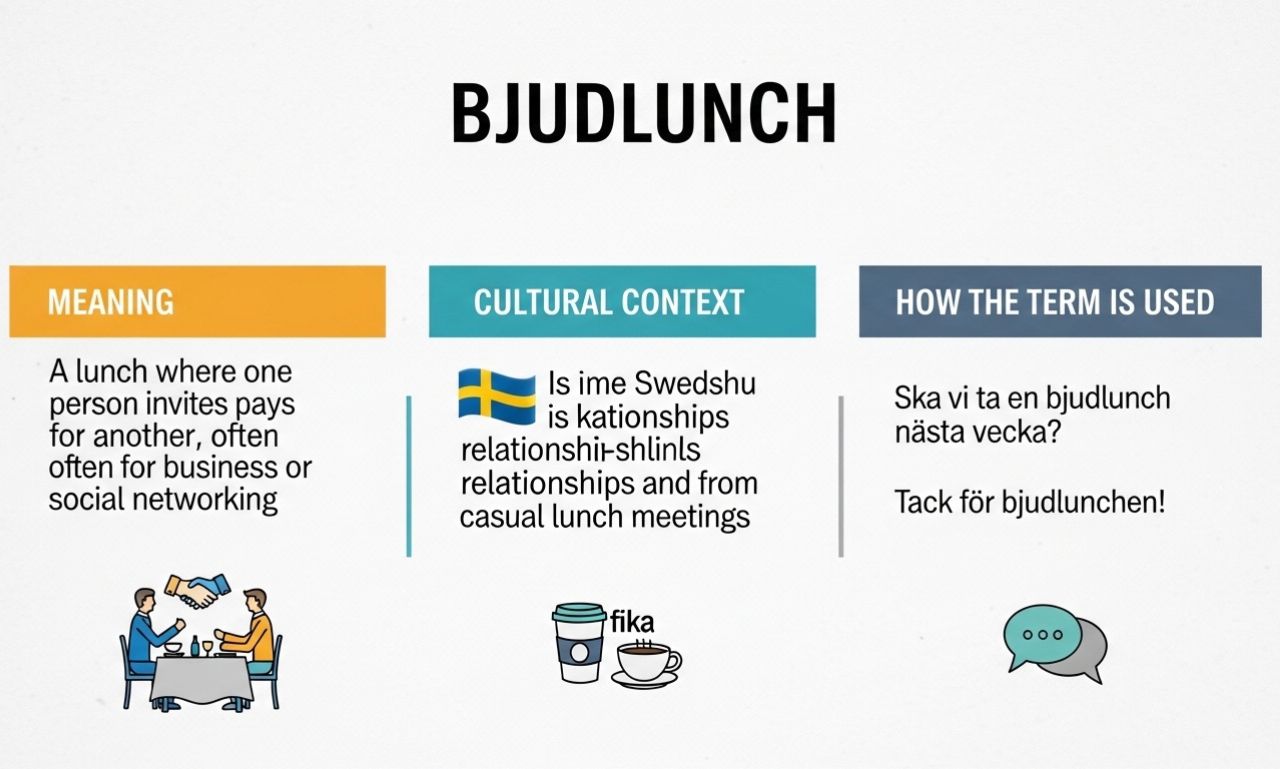

Language often reflects everyday social habits, and some words capture an entire custom in just a few syllables. Bjudlunch is one such term. Commonly used in Swedish contexts, bjudlunch describes a simple but meaningful social act—inviting someone to lunch and paying for it.
This article explains what bjudlunch means, how it’s used, its cultural importance, and where you’re most likely to encounter the term today.
What Does Bjudlunch Mean?
Bjudlunch is a Swedish compound word made up of:
-
bjuda – to invite or to treat
-
lunch – lunch
Together, bjudlunch literally means “treating someone to lunch” or “an invited lunch where the host pays.”
In everyday usage, it refers to a lunch offered as a gesture of goodwill, appreciation, hospitality, or professional courtesy.
How Bjudlunch Is Commonly Used
Bjudlunch appears in both spoken and written Swedish, especially in social and professional settings.
Common contexts include:
-
A company inviting employees to a free lunch
-
A manager treating a colleague or client
-
A friend offering to pay for lunch as a kind gesture
-
An organization hosting a complimentary lunch event
Example usage:
-
“Chefen ordnade en bjud lunch för teamet.”
(The boss arranged a hosted lunch for the team.)
Bjudlunch in Swedish Culture
In Swedish culture, bjud lunch represents more than just food—it reflects values such as equality, appreciation, and social balance.
Cultural significance:
-
Professional courtesy: Often used in workplaces to strengthen relationships.
-
Social bonding: A relaxed way to connect without formality.
-
Appreciation: Commonly offered to say thank you or celebrate milestones.
-
Low-pressure hospitality: Less formal than a dinner invitation.
Unlike extravagant hosting, a bjud lunch is usually modest, practical, and inclusive—very much aligned with Scandinavian cultural norms.
Bjudlunch in the Workplace
In professional environments, bjudlunch is especially common.
Examples:
-
Team lunches paid for by the company
-
Client meetings over lunch
-
Recruitment or onboarding lunches
-
Project completion celebrations
Offering a bjud lunch in a work setting is seen as polite and professional rather than excessive.
Is Bjudlunch a Formal Term?
Bjud lunch is semi-formal:
-
Suitable for workplace emails and announcements
-
Common in internal company communication
-
Used in event invitations and notices
You might see it in phrases like:
-
“Vi bjuder på lunch” (Lunch is on us)
-
“Bjud lunch för anställda” (Hosted lunch for employees)
Modern Usage and Online Presence
Today, bjud lunch also appears in:
-
Corporate websites
-
Event descriptions
-
HR announcements
-
Social media posts
-
Job listings (as a perk or benefit)
In digital contexts, it may even be used as a keyword to highlight company culture, employee benefits, or networking events.
SEO and Keyword Relevance of “Bjudlunch”
From an SEO perspective, bjud lunch is:
-
A low-competition keyword
-
Highly language- and region-specific
-
Relevant for Swedish audiences
-
Useful for content related to work culture, events, or hospitality
Websites targeting Swedish users can benefit from including the term naturally in relevant content.
Similar or Related Terms
Related Swedish phrases include:
-
Gratis lunch – free lunch
-
Lunchbjudning – lunch invitation
-
Vi står för lunchen – we’re paying for lunch
-
Personallunch – staff lunch
Each has a slightly different nuance, but bjud lunch clearly emphasizes the act of treating someone.
Final Thoughts
Bjud lunch is a simple yet culturally rich term that reflects generosity, professionalism, and social connection in Swedish life. Whether used in workplaces, friendships, or events, it conveys a welcoming gesture without unnecessary formality.
As digital communication grows, bjud lunch continues to appear as both a practical phrase and a meaningful expression of appreciation—proving that sometimes, language and lunch go hand in hand.